
Services · Diagnostic Sprint
Diagnostic Sprint
One defined question about how a priority audience reads the company. Typically 6 to 10 weeks, for a fixed fee.
Before the financing takes shape
A cross-border financing starts being decided before anyone opens a data room. Investors place the company against what they have already seen, regulators against what they already worry about, and the company’s materials arrive inside views that formed without it. By the time the roadshow deck is being argued over, much of the interpretive work has already happened somewhere else.
In a financing, the Sprint fits the earlier window: a first international fundraise before investor perception has settled, the company’s account of itself ahead of listing preparation, or the period after a change of ownership, when the identity inherited from the past no longer matches the company now raising.
The question that comes first
Management usually starts by asking whether its story is clear and persuasive. A prior question matters more, and it is the one management needs to put to itself: who do the people deciding our outcome currently think we are, and how far is that from who we need them to see?
A company is never read from a blank slate. Its public record, origin, ownership and past communications have already built the frame through which the next audience will read it. A better story does not change that frame by itself. Knowing precisely where the frame sits is what makes a better story possible.
What the work examines
The Sprint reads two bodies of material against each other. On one side, the record the audience actually sees: media coverage, analyst commentary, regulatory commentary and the descriptions already in circulation. On the other, the company’s own account: board and investor decks, prior external communications, and the documents being prepared for the decision ahead.
Management’s understanding of the company may rest on operating choices and capabilities that its materials have never explained. The work makes that understanding explicit, tests it against the evidence and develops the narrative for the priority audience. The enquiry stays focused on that audience and the decision ahead.
Who participates
The executive responsible for the outcome takes part directly. The work also needs the people who wrote or approved the current external story, so their reasoning can be heard rather than reconstructed. Participation stays concentrated. The point is to recover how the present narrative formed and establish the management judgement, not to run a broad internal process. Youxi Huang conducts the analysis, leads the discussions and writes every deliverable; there are no junior teams and no handoffs.
How the work proceeds
At the start of the engagement, Youxi Huang meets the executive responsible for the decision for up to 90 minutes to test the working assumptions and establish the scope. Each week the practice sends a one-page written progress note: the materials examined, the assumptions being tested and anything the work needs from the company.
After the written deliverables are sent, Youxi Huang meets the executive again, for up to 90 minutes, to go through the deliverables in the order of the decisions they serve and to answer questions. The written deliverables remain the record of the conclusions.
What the client receives
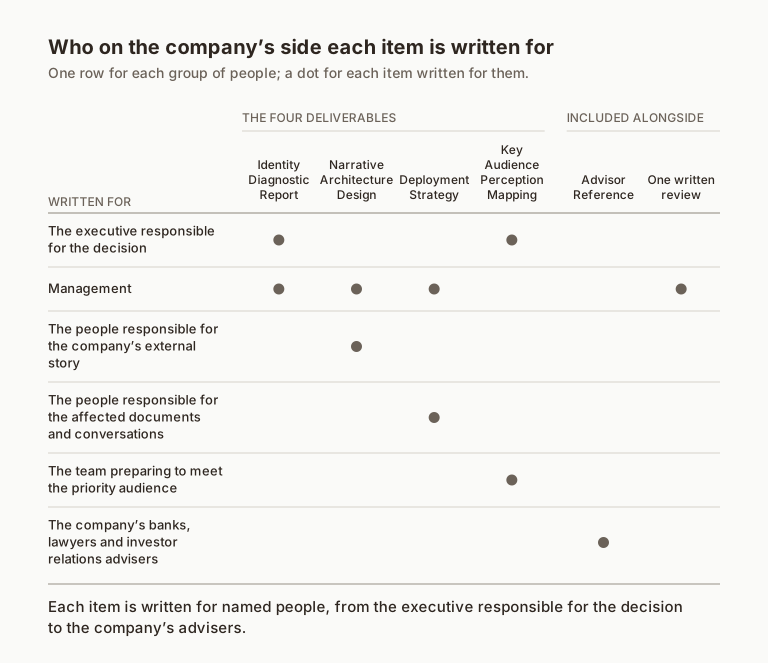
- Identity Diagnostic Report. For the executive responsible for the decision and the management team, this identifies where the priority audience’s reading departs from the company’s own account, and which of those gaps matter to the decision ahead. Management uses it to decide what needs to be resolved before revising its materials.
- Narrative Architecture Design. For management and the people responsible for the company’s external story, this sets out an account of the company designed for the priority audience, with the evidence behind each claim and the limits of that evidence. They use it as the basis for revising the company’s own presentations and other materials.
- Deployment Strategy. For management and the people responsible for the affected documents and conversations, this sets out which company materials need to change, in what order, and who owns each change. It gives those people a working sequence for carrying the architecture into the company’s materials and discussions.
- Key Audience Perception Mapping. For the executive and team preparing to meet the priority audience, this turns the questions that audience is likely to ask into a preparation set: the concern behind each question, the first sentence of the answer, the narrative pillar it draws on, and the limit of what the evidence supports. A one-page card accompanies the set for use in meetings with that audience.
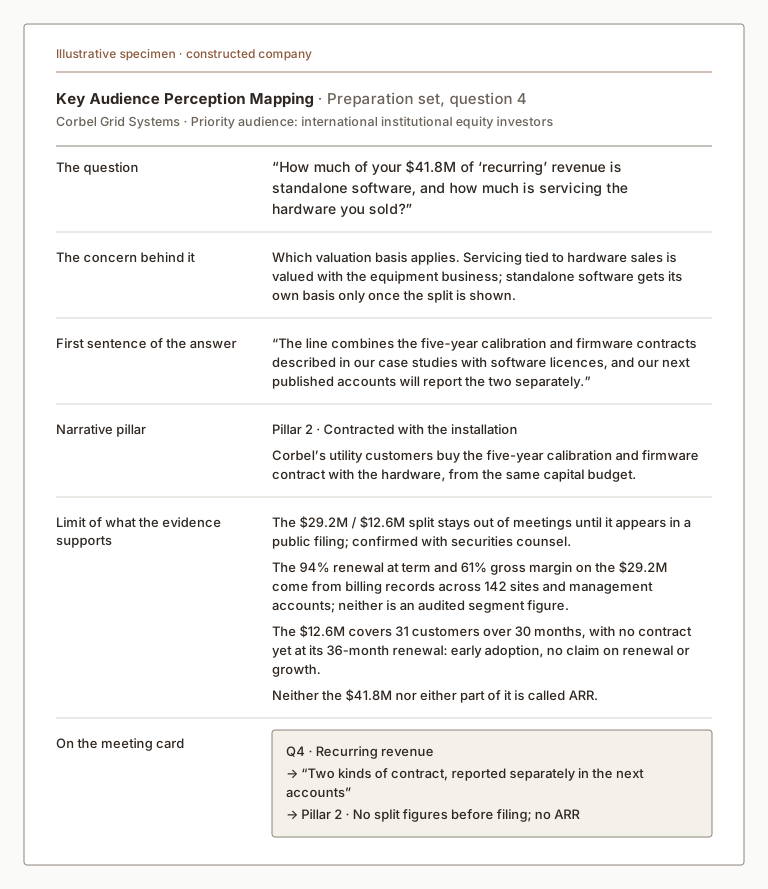
An illustrative case follows the same constructed company and revenue line later, through a board decision in its listing window.
Included alongside the four deliverables
- Advisor Reference. A two-to-three-page reference for the company’s banks, lawyers and investor relations advisers. It sets out the core account of the company, the narrative pillars and the evidence behind each, including the claims the company can support and those it will not make. Advisers use it as a reference when preparing their own work.
- One written review. Within six weeks of delivery, or before the company’s next decision point if that comes first, the company sends the key documents it has revised. The practice gives management one written, claim-by-claim assessment of those revisions against the architecture, identifying the points that still need attention.
Together, these two elements make the next step concrete: a reference for the advisers, and a written check of what the company has changed. The reference gives each team an account to consult within its own work; the review shows management where the revised materials follow that account and where claims still need attention. The company remains responsible for its materials, and each adviser for its own advice and execution.
The Sprint brings selected information-quality principles from the EU Prospectus Regulation into narrative design. We make the evidence behind each conclusion clear and keep material limitations alongside the claims they qualify, including in short meeting answers.
When to start somewhere else
When several audiences are evaluating the company at once and the work needs to follow key decisions as they approach, Transaction Narrative Architecture is the appropriate form of engagement.
The work also needs a real decision ahead of it. Where nothing is about to be decided, there is nothing for the judgement to change, and we tell management that up front.
The next step
A first exchange establishes whether the Sprint fits: a cross-border decision ahead, and one audience whose view of the company management wants to understand before execution begins. Write to the practice to begin.
Scope, fees and terms of an engagement are set in the documents both parties sign.