Services · Standalone product
Cross-Border Perception Memo
How key overseas audiences read the company’s public-facing materials, friction by friction. Ten working days, entirely in writing, at a fixed fee: $10,000 with a resolution direction for each friction, or $3,000 for the analysis alone.
Two forms of the memo
Analysis alone
$3,000
Identifies the main perception frictions in the company's public-facing materials, one by one, as its key overseas audiences would read them. Resolution directions can be added within one month for a further $7,000.
Request the analysisAnalysis with resolution directions
$10,000
The same analysis, plus the direction a fix would take for each friction, within the materials where it appears. The complete form of the memo.
Request the complete memoBoth forms draw on public information only, run entirely in writing and are delivered within ten working days after full payment. The full amount paid for the memo is credited against an engagement signed within one month after the memo's most recent delivery.
The reading that happens before the first meeting
A company approaching an overseas audience has usually been read before anyone meets it. The website, the deck on a portal, the filings, an interview the founder gave two years ago: these are the materials doing the introducing, and they are read without the company in the room. Most companies have never checked what that reading looks like from the other side.
The Cross-Border Perception Memo is that check. It reads the company’s public-facing materials the way its key overseas audiences read them and identifies the main perception frictions one by one. In its complete form it also gives a surface-level resolution direction for each.
What the memo covers
The work draws on public information only. No internal materials are required, and none are accepted. Within two working days after full payment, the practice sends a one-page note listing the public materials it plans to examine and the overseas audiences from whose perspective it will read them, and asks which of these matters most to the company. The company’s reply, together with any list of public-facing materials it would like the practice to concentrate on, guides the emphasis and is the only client input to the work. If no reply comes within two working days, the work proceeds on the scope set out in the note. The memo addresses the main frictions across the company’s public-facing materials rather than auditing every published item.
Sometimes the evidence of what a company has built is already public, but scattered across pages that never explain the connection. The memo identifies where that can leave an overseas reader with an incomplete or misleading account, and what the materials support.
The memo takes the perspective of the overseas investors, customers, partners, regulators or counterparties the company is approaching, as described in its request and confirmed in that note. Each friction is treated at the level where it lives: what the material says, what the audience is likely to make of it and, where the resolution directions are included, the direction a fix would take. Where a friction points to something deeper than the materials, in how the company accounts for itself, either form of the memo names the deeper point in one line without developing it. The resolution directions stay within the materials themselves.
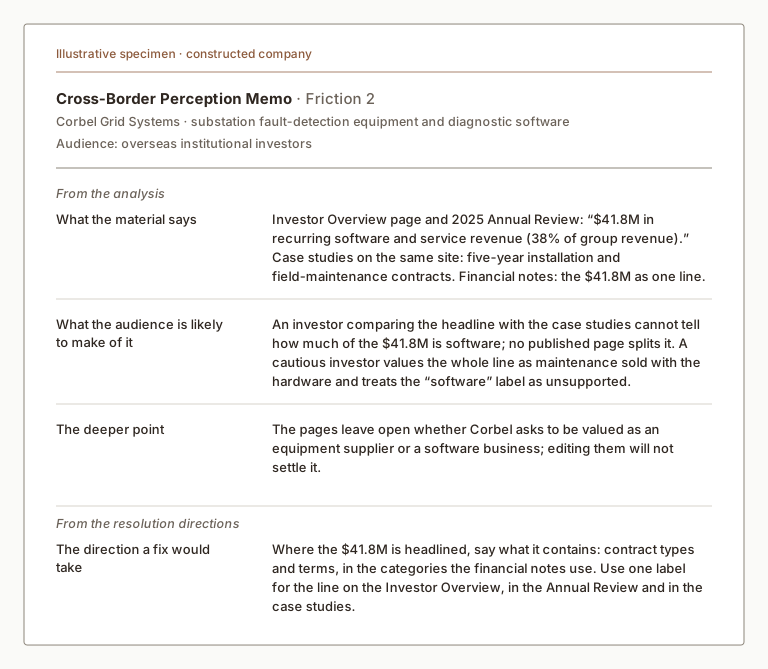
An illustrative case follows the same revenue line further, to the point where changing the labels no longer settles the question and the board has to decide.
What the client receives
In its complete form, the memo consists of two written documents. The analysis identifies the main perception frictions in the company’s public-facing materials, item by item, as its key overseas audiences would read them. The resolution directions set out, for each friction, how to address it in the materials where it appears.
The complete memo is the analysis with the resolution directions. A company that first wants only the reading can take the analysis alone, and add the resolution directions afterwards for a further $7,000, paid within one month after delivery of the analysis.
Either form is delivered within ten working days after the practice receives full payment. The client may send one round of written questions within ten working days of delivery; the written reply closes the work. Resolution directions added later are delivered within ten working days after the practice receives the further payment, with their own ten-working-day window for one round of written questions. The memo runs entirely in writing.
The fee
$10,000 for the analysis with resolution directions. $3,000 for the analysis alone, with the resolution directions available afterwards for a further $7,000, paid within one month after delivery of the analysis. Each fee is fixed and payable in full before work begins, and the ten working days run from the day the practice receives full payment. If the company signs a formal engagement within one month after the most recent delivery of the memo, the full amount paid for the memo is credited against it.
Where the memo sits
The memo is a standalone product, not a formal advisory engagement, and the difference is one of category, not size. The two engagements, the Diagnostic Sprint and Transaction Narrative Architecture, work from internal materials as well as public ones and reach the company’s underlying account of itself; the larger of the two brings the practice to the table at decision points. The memo works from public materials alone and stays at their surface: what those materials are doing to the way the company is read and, in the complete form, the direction a fix takes. When its findings point deeper, the Diagnostic Sprint is the natural next conversation.
When the memo fits
The memo fits the moments when an outside view, within a fixed scope, is worth more than a longer commitment: before conversations with overseas investors or partners begin, ahead of a refresh of the materials those audiences will see, or after reactions from overseas counterparts that the materials were never meant to produce.
How to request it
Request the memo through the contact form, saying which form you want. The practice runs a limited number of memos each month and confirms first whether it can take the work on. Confirmation comes with a short written agreement by email; the ten working days begin when the practice receives full payment.
Scope and terms of the memo are set in the agreement both parties confirm.