
Services · Transaction Narrative Architecture
Transaction Narrative Architecture
For a company being evaluated by several audiences at once, with narrative advice needed at key decisions. Typically 2 to 4 months, driven by the project timetable, for a fixed fee.
When the transaction starts keeping score
A financing becomes public at a recognisable moment: an IPO timetable begins to circulate, a raise is announced or widely expected, the window opens. From then on, investors, regulators and financial media are reading the same company through different assumptions, and their readings move independently. One audience’s questions, another’s priorities and a third’s confidence stop moving together. Each can reach the deal on its own timetable. The company is being scored, and the score can move the deal.
Transaction Narrative Architecture is built for work that has to follow a real external timetable, with several distinct audiences evaluating the company and holding different power over the outcome. When the question is how one audience sees the company, the Diagnostic Sprint is the better instrument, and we will say so.
The question nobody owns
As the window opens, management’s account of the company has to answer different questions at once. Investor materials, regulatory positioning and the account offered to financial media can each be accurate while quietly starting from different versions of the company. The work checks that adapting those explanations does not change the underlying facts, commitments or material limits. The question is whether every workstream still describes the same company, and what management needs to settle before the next decision.
How the work runs
In a financing, the work starts from the materials already shaping the transaction: board and management presentations, draft investor and roadshow decks, the transaction rationale and timetable, adviser issue lists, anticipated questions, and the public record around the company. From there it moves in sequence with the deal.
- Diagnostic foundation. How the company is currently understood, where the identity gaps sit, and which audience judgements have power over the transaction.
- Multi-audience architecture. One identity narrative that holds across distinct audiences without pretending they all need the same argument.
- Transaction sequencing. Narrative decisions placed against the actual window: what must be established early for later communications to carry weight.
- Adviser and leadership alignment. The advisers get a shared foundation; management and the board settle the choices and external boundaries only they can authorise.
What the client receives
Every Diagnostic Sprint deliverable, extended across the engagement, plus three built for it:
- Multi-Audience Narrative Matrix. For management, this sets out what each audience needs to be able to accept, how it currently reads the company, and what stands in the way. Management uses the matrix to see where the different readings call for a common decision, and where the company needs to preserve distinctions between audiences.
- Advisor Narrative Interface. For the company’s legal, financial, investor relations and communications advisers, this sets out the shared identity framework, how the audiences differ, and where each workstream picks it up. Each team can use it to check its own materials against the same underlying account, while retaining responsibility for its own advice and work.
- Management and Board Narrative Alignment Memorandum. For management and the board, this records the company’s core account, the narrative choices requiring agreement at that level, and the external boundaries they are authorised to set. Management uses it to settle those choices before passing the agreed account to the advisers responsible for their respective workstreams.
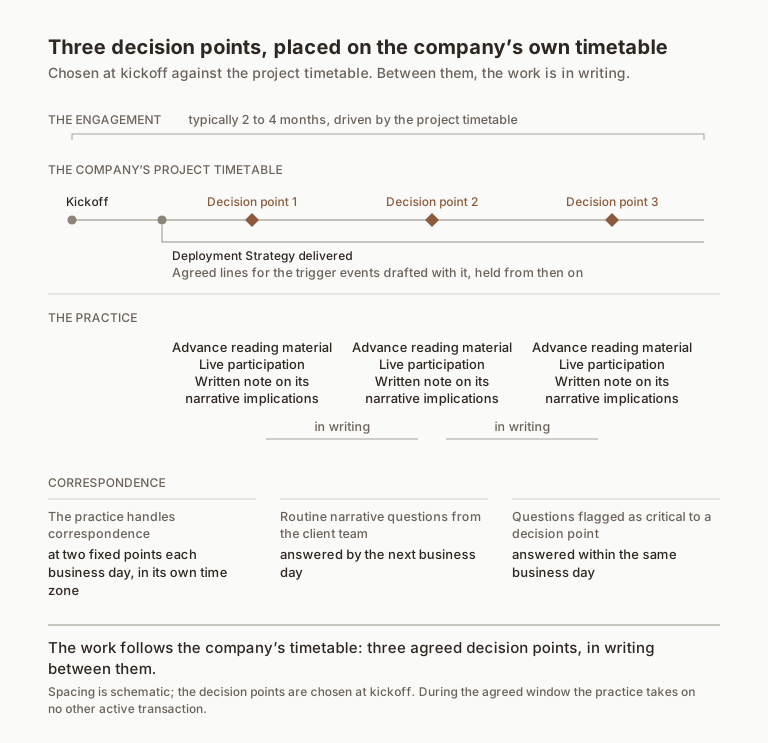
Advisory participation covers three decision points, chosen at kickoff against the project timetable, each with advance reading material, live participation and a written note on its narrative implications. Between decision points the work is in writing. The practice handles correspondence at two fixed points each business day, in its own time zone; it answers routine narrative questions from the client team by the next business day, and questions flagged as critical to a decision point within the same business day. The agreed narrative lines for the trigger events identified in the Deployment Strategy are drafted alongside that strategy, so the company has them ready when an event occurs. During the agreed window the practice takes on no other active transaction. Youxi Huang conducts the analysis and takes part in the management and adviser discussions directly.
We use selected principles from the EU Prospectus Regulation as a reference for consistency across transaction materials. Our review checks that adapting the language for different audiences does not change the underlying facts, commitments or material limitations.
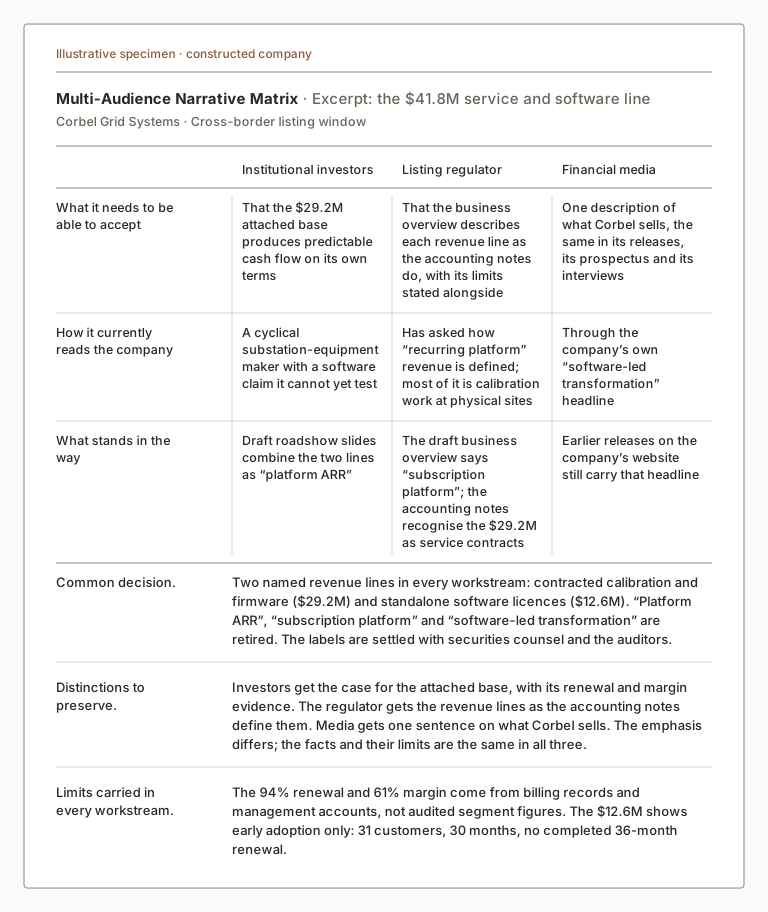
The specimen comes from an illustrative case that follows Corbel Grid Systems through the board decision behind this revenue line.
Working with the advisers around the table
The Advisor Narrative Interface gives the client’s legal, IR, communications and financial advisers one identity framework to build from, so their materials stop diverging at the source. Their analysis, execution and professional responsibilities remain fully their own. What the practice adds is a check that sits outside any single workstream: whether the workstreams have started from incompatible versions of the company, and what to resolve before those versions appear in public.
Starting
The first exchange starts from the situation as it exists today: what the market already knows, which audiences are already evaluating the company, what communications are in motion, and where an identity judgement could change the next decision. The engagement is confirmed after that exchange. Write to the practice to begin.
Scope, fees and terms of an engagement are set in the documents both parties sign.