Situations
Before a cross-border acquisition
Cross-Border Identity Architecture is independent pre-transaction advisory. Before a cross-border acquisition, it is used to establish how screening authorities, the target’s board and the other audiences with power over the deal are likely to read the acquirer, and where that reading departs from the acquirer’s own account: the gaps that surface later as diligence findings, approval delays and conditions. Cross-border financing and listing are the practice’s main focus; acquisitions are within scope for the memo and both engagements.
What is being decided
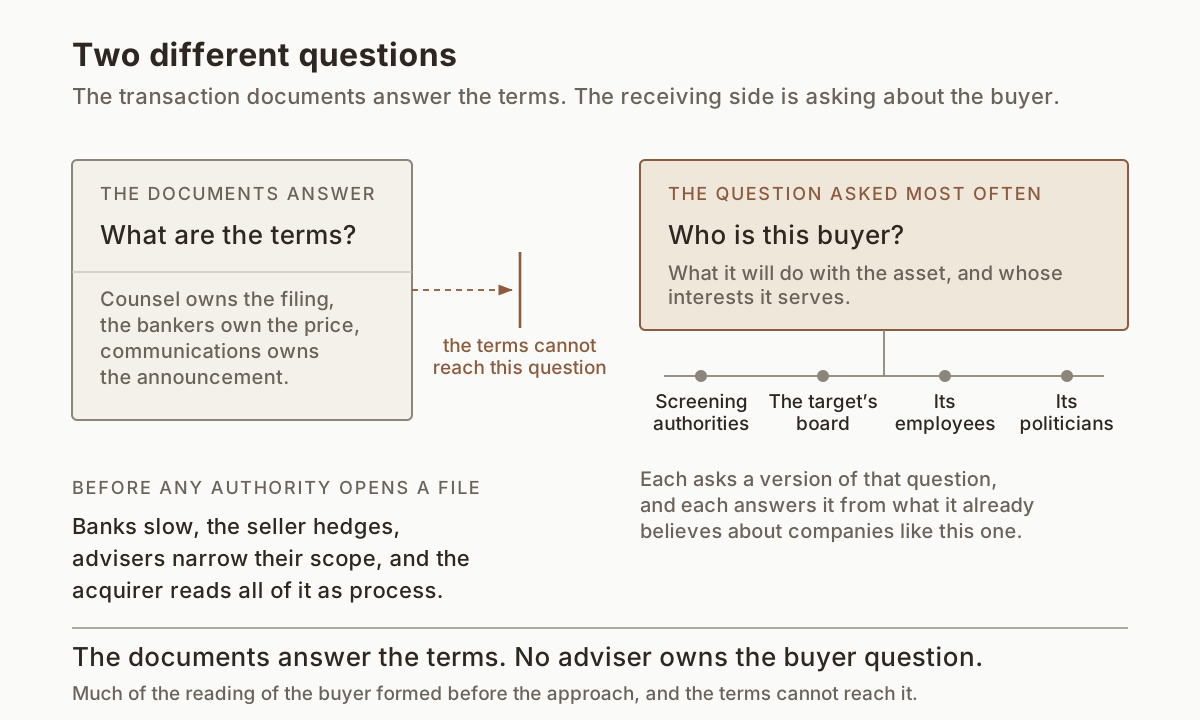
In a cross-border acquisition the question asked most often is not about the terms. It is about the buyer: who this acquirer is, what it will do with the asset, and whose interests it serves. Screening authorities, the target’s board, its employees and its politicians each ask a version of that question, and each answers it from what they already believe about companies like this one. The transaction documents answer a different question.
The friction starts before any authority opens a file. Banks slow, the seller hedges, advisers narrow their scope, and the acquirer reads all of it as process. Much of it is a reading of the buyer that formed before the approach and that the terms cannot reach.
When this work is relevant
Three conditions usually hold together.
- The moment. The approach is decided or the process is under way, and the acquirer’s account of itself has not been tested against how the receiving side reads it.
- The fit. Several audiences with different frameworks hold power over the outcome, and no adviser owns the buyer question. Counsel owns the filing, the bankers own the price, communications owns the announcement; who the receiving side thinks the buyer is belongs to no one.
- A real decision. Something is about to be decided that the judgement can change: the buyer narrative before it forms, regulatory engagement before it begins, the board meeting that decides whether to proceed.
The moment alone is not a reason to engage. Where the problem sits in the public-facing materials themselves, the Cross-Border Perception Memo is enough, and the practice will say so. Where no decision is ahead, no engagement is needed.
What this is, and what it is not
Companies often arrive at this work from regulatory strategy or deal communications. The practice establishes, from the public record and the acquirer’s own account, how the receiving side is likely to read the buyer; it does not run the regulatory process or write the announcement. The practice is not tied to any home market. Engagements are defined by the company, the decision at hand and the audiences with power over it, subject to conflicts and fit.
Where to go next
- One priority audience, usually the screening authority or the target’s board, and one defined question: the Diagnostic Sprint, typically 4 to 8 weeks.
- Several audiences scoring the acquirer at once, against a live deal timetable: Transaction Narrative Architecture, typically 2 to 4 months.
- A check of the acquirer’s public-facing materials as the receiving side will read them, within a fixed scope: the Cross-Border Perception Memo.
- No decision ahead: start with the identity dimension of blocked cross-border M&A, and come back when there is one.
The work sits upstream of legal, financial, transaction, IR and communications advice; it does not replace them. It does not design the transaction structure, give a legal view on approval or forecast political outcomes.
Related reading
The Identity Dimension of Blocked Cross-Border M&A
Screening authorities, boards, employees and politicians read one acquisition differently. What they ask about the buyer is not what the terms answer.
How Regulatory Friction Begins Before Formal Review
Banks slow, sellers hedge, and advisers narrow their scope before any authority opens a file. On why that early friction is not always a compliance problem.